
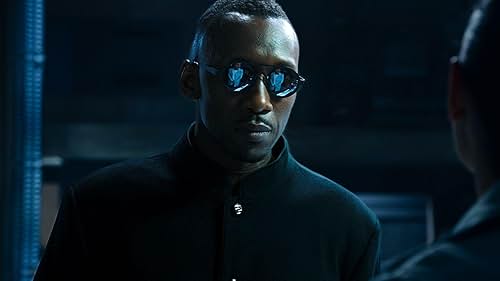

Captain Shepherd
Name Roland Christopher Harris Jr.
Position Captain
Rank Captain
Character Information
| Gender | Male | |
| Origin | Redpill | |
| Age | 36 |
Physical Appearance
| Height | 6'4" | |
| Weight | 200 Lbs | |
| Hair Color | Black | |
| Eye Color | Dark Brown | |
| Physical Description | Shepherd is a towering figure standing at 6'4" with a frame that suggests the challenging, active life of a creature of the Resistance. His skin is a deep, rich mahogany and his face is etched with the quiet weariness of a man who has looked at the world and found it wanting. His most striking feature is his eyes—dark, intense, observant, and possessing a preternatural stillness. There is a sensitive quality to his gaze, a mix of profound compassion and analytical detachment that can make a person feel both entirely seen and thoroughly judged in a single look. He carries himself with a stoic grace, his movements economical and precise, born from years of navigating the cramped, vibrating corridors of hovercrafts. His hands, though capable of the delicate tinkering required for hardware repair, are large and strong. When he speaks, his voice is a resonant, velvet baritone, quiet enough not to disturb the peace of a room, by carrying a weight that draws attention to his few words. |
Personality & Traits
| General Overview | Shepherd is quiet and intense—a thinker who operates on a frequency few others in the world seem to tune into. His intelligence is not merely academic, but perceptive; he views the world as a series of intricate patterns and moral tests. Where others see a chaotic war against the Machines, Shepherd sees a sacred duty to restore the fragments of a broken humanity. He is more prone to deep introspection than rash judgment, preferring to weigh the ethical implications of a choice before committing his ship and crew to it. He judges the universe according to a strict internal moral compass that often places him at odds with the much more practical, asset-based logic of High Command. To Shepherd, order is not found in military bureaucracy, but in the complex hierarchy of values that give life its true meaning. He is highly observant, noticing the subtle flicker of a glitch in the Matrix or the hidden fear in a crewmate’s eyes, and he uses these observations to navigate both the Matrix and the complexities of the real world. |
|
| Strengths & Weaknesses | Strengths Observant: Shepherd possesses an uncanny ability to identify patterns that others miss. Whether it is a subtle repeating code in the Matrix or a minor mechanical shudder in the Styx’s engines, his hyper-awareness sometimes allows him to anticipate threats seconds before they manifest. Moral Clarity and Integrity: In a world of gray areas and tactical sacrifices, Shepherd’s compass never wavers. His crew follows him because they know his decisions are never dictated by ego or politics, but by a bone-deep commitment to human life. Calculated Composure: He is the tactical conscience of any cockpit he stands in. His ability to remain quiet and introspective under extreme pressure allows him to make precise, difficult decisions without succumbing to panic. Eloquent Leadership: Though a man of few words, his voice carries immense weight. He has the rare ability to deliver calm rebukes that can sway the Supreme Council or a single human heart. Weaknesses Single-Minded Obsession: His "Abandon None" doctrine is his greatest vulnerability. Shepherd’s drive to save every "lost sheep" can lead to a tunnel vision that ignores broader strategic risks, potentially endangering his entire ship and the city of Zion for the sake of a single soul. Aversion to Pragmatic Sacrifice: His refusal to view humans as "tangible assets" creates a friction with High Command that borders on insubordination. By prioritizing the individual over the collective mission, he often places himself in the crosshairs of leaders like Commander Flint, creating political instability within the Defense Force. Emotional Detachment and Isolation: While he is considerate of others, he gives little attention to his own emotions. This internal wall can make him appear cold, dismissive, or unreachable at times. His tendency to retreat into bouts of unexplained silence after a loss can leave his crew feeling rudderless. Deep-Seated Resentment: The "burn in his belly" regarding the abandonment of his father fuels his personal mission, but it also colors his judgment. His personal grudge against the "callous" establishment can occasionally cloud his tactical objectivity, making him prone to defiance simply for the sake of challenging a system he views as broken. |
|
| Ambitions | Shepherd does not seek the traditional trappings of power or the hollow prestige of military rank; instead, his ambitions are forged from a singular, moral obsession to reshape the soul of the Resistance. He aspires to dismantle the inhuman logic that dominates Zion’s High Command, aiming to pivot the entire Defense Force away from a posture of mere survival toward a proactive mission of universal liberation. For Shepherd, Zion is not a fortress to be guarded, but a door that must be held open at all costs. By taking command of the Styx, Shepherd intends to transform his ship into a living laboratory for this humanist doctrine, creating a blueprint for a new generation of leaders who prioritize saving all of humanity instead of just the ones that live in Zion. |
Family
| Spouse / Partner: | None | |
| Children | None | |
| Parents | Roland Harris Sr. (Sykes) Gina Harris |
|
| Siblings | Elis Harris Marcus Harris |
Unrelated Ties
| Friends | Nya, Captain of the Colossus Nya is a friend and a former lover of over a decade. Their relationship is complicated, and while they worked very closely together as allies for many years, many of which they shared a bed, their love for each other is hard to describe as being particularly romantic. Shepherd is in love with his calling more than any person, and Nya happens to notice that fact. |
|
| Enemies | Flint, Commander of the Zion Defense Force |
History
| Biography | Light in the Projects Roland Harris Jr. was the third son born to Roland and Gina Harris, who lived in the gang-infested Moriah Projects in Richland. Roland Sr. was a struggling pawn shop owner who worked long hours while his mother worked as a clerk in a dress shop on the other side of town. Financially, they barely scraped by, but attended Church weekly and instilled deeply-held convictions of compassion and honesty in their sons. Elis, Marcus, and Junior, as he was known by his family, were each two years apart in age and grew up playing basketball at the local court and watching cartoons on TV. While his older brothers were energetic and charming, young Roland was quieter, more thoughtful, and more deeply moral. When he started at Garvy Elementary school, he had no interest in making friends or fitting in, but preferred to read, play alone, or observe his classmates in silence. From a very early age, Roland seemed to notice things about the world around him that others tended to miss, like a butterfly passing by a window in exactly the same way it had many times before or a crack on the ground outside the neighborhood basketball court being identical to one on the sidewalk in front of his grandparents’ house. He also tended to notice inconsistency in some of the adults he encountered. These glitches and breaks seemed to go completely unnoticed by others, particularly adults, and Roland was considered “sensitive” at this age, which was a euphemism for “strange”. His brothers tended to make fun of him for his differences and his mother often tried in vain to get him to behave more normally, but his father actually seemed to admire this quality in his son; it was one that they shared. As Roland approached his teenage years, he started to help his father in the pawn shop. During those long hours after school, his father taught him the value of the trinkets they acquired, and when any technology made its way into the shop, he would show Roland exactly how it worked. Roland developed a love for tinkering, pulling apart hardware, and even got an introduction to software and coding. By the time Roland was attending Richland Senior High School, he was leading the Computer Club and making friends with students who shared his interests. Though he found that none of them had the same quirks of observing the world and noticing its strange patterns and inconsistencies, he started to focus on developing social connections for the first time and even found himself in a serious relationship starting in his sophomore year. His teenage years were a flash of arcade visits and basement LAN parties and he excelled in his studies. Though he helped his father in the shop less frequently, he started to notice something about his father he hadn’t before. He noticed his father’s extremely quick reflexes and even watched him beat up three muggers outside the shop singlehandedly. His father also had an unexplained melancholy defined by a love for his family, but a general apathy about the world around them. Whenever Roland would try to find out more about his father’s past, his dad would provide stories that seemed doubtful and incomplete. Roland’s life would change forever when he was 17 years old. While working in his school’s computer lab several hours after the end of the school day, his monitor started displaying green scrolling code and a message that told him the Matrix had him and that he should “follow the bouncing ball”. At the very same moment, a group of his friends arrived, bouncing a basketball in the hallway, and invited him to the arcade. He quickly agreed and went with them. While at the arcade, he was approached by a woman in her late twenties named Nya who told him she knew why nothing in the world seemed real to him. When he asks what the Matrix is, she tells him a man named Flint can provide the answers he seeks. The next day, Roland was at home when his mother’s cell phone rang. He answered it and a man’s voice told him he had been found and that he had to run. Roland, exited his house and ran through his neighborhood while being pursued by men in sunglasses and suits. He was directed into an abandoned building, onto a roof, and then down a fire escape where he entered the back of a car where Nya waited for him. Later that evening, he was taken to meet Flint who explained to him what the Matrix was and presented him with the pills. He knew the world around him was a lie and he was an honest person. He took the red pill, choosing to leave behind his life, his family, his friends, and his girlfriend to find a deeper truth. The Rabbit Hole In the real world, Roland’s umbilicals detached and he was dumped from his pod toward the Machine’s waste vats. He woke up on a medical table aboard a hovercraft called the Ashurbanipal. He was introduced to the real life Flint and Nya, the ship’s captain and first mate, and the rest of its crew. They explained to him the Matrix and the reality of life in the real world. Over the next several days, Roland learned much, but each answer only seemed to bring more questions. When he finally asked about his father, Flint revealed that Roland Sr. had been a Zion Operative name Sykes who had been recaptured by the Machines and reintegrated into the Matrix as part of an infiltration plot by the Resistance some time before Roland’s birth. When the machines discovered what they were doing, the operation was abandoned and, as a result, so was his father. When Roland learned that his father was a half-oblivious abandoned real world agent, he immediately insisted Flint go back and retrieve his father. Flint, however, outright refused, saying that Roland’s father would be a high-risk extraction with no strategic value. Roland was enraged by this and the men had an argument that even came to blows before he was confined to quarters. The Ashurbanipal soon arrived at the gates of Zion, the last human city, where Roland was offloaded and processed without another word from Flint. Though technically a minor, it was decided that Roland should have his own home in the small dwellings on the upper floors of the Living Levels. He was given some basic possessions, a tour, and then went to live alone in a new world. Adjusting to the vat-created porridge, the roughspun clothes, and the deeply connected, densely-packed communal life of Zion was a culture shock for him. He had made the decision to leave his loved ones behind, and the knowledge that his father had lived in Zion once and had been abandoned by its decision-makers burned in his belly. Part of him longed for the sun, good food, and the friends he left behind, but he clung to reality as his only real solace. He completed his senior year in one of the secondary schools of Zion’s Galleria and then enlisted in the War College in the hope that he might one day be able to liberate his family. While studying at the War College in Zion’s Docks, Roland grew strong and knowledgeable and excelled in his training in the Pilot Division. The piloting simulators, which were much like advanced video games to him, felt fun and familiar. While other cadets bounded and spent their surplus watts at the bars, Roland lived a mostly quiet and solitary life. Plagued with a silent guilt and a deep and driving ambition to fulfill his own personal mission, he kept his mind on his studies and left time only for a few choice friends. His peers regarded him with a kind of reverent respect where his few words were always taken seriously, and they often commented on the quiet, dark drive that seemed to power him, making the military less a career path for him and more like a religious calling. He kept his father a deeply private truth, but adopted the much broader conviction of many Zionites that as many people should be liberated from the Matrix as possible. This conviction was rarely held by the higher-ups in the Defense Force, including his professors, so ideological conflict became a frequent experience for him. During his combat and mission training, he showed a consistent habit of rescuing downed teammates and assets, even if it meant disobeying orders. While this obviously got him into trouble on several occasions, he was soon given the name “Shepherd” for his habit of saving lost “sheep.” Colossus In 2211, Shepherd graduated with honors, his academic and simulation scores among the highest in his class. He had developed a reputation for a reliable officer as well, meaning he had earned a small amount of flexibility in his first assignment. He was initially slated to return to the Ashurbanipal under Flint’s command, but when he learned about this plan, he outright refused, threatening to resign his commission. When Flint eagerly concurred that Shepherd was a bad fit for the Ashurbanipal, he was instead requested to serve aboard the Colossus, the fleet’s largest vessel, under the command of her new captain, Nya. He accepted, and when he stepped onto the bridge of the massive hovercraft, he believed that he was one crucial step closer to rescuing his father and putting his philosophy into action. Nya was pragmatic, but her humanity and her compassion often distinguished her from the more establishment-friendly officers that Shepherd was starting to regard as the greatest internal problem the fleet faced. She welcomed him as a valuable member of her crew and made quick use of him inside and outside the Matrix. Shepherd experienced some initial disappointment when his early missions didn’t even allow him access to the Moriah Projects, take him anywhere near his father, or give him access to find out anything about him. After a few months of quiet frustration, Shepherd confided in Nya, telling her that his major goal was to rescue his father. While she showed him gentle understanding, she informed him that it was just too dangerous at that time for them to mount a rescue of his father or even to monitor him too closely since he had undoubtedly been “tagged” by the Machines and any rescue attempt would put his father‘s life in serious jeopardy. Though Shepherd was single minded, he showed how much he had matured since his fight with Flint years before agreed to pursue his goals subtly until they could find a safe solution. For the next four years, Shepherd served on the Colossus with distinction. He grew closer to the crew and piloted the vessel through the lightless sewers with consistent skill. He entered the Matrix missions and utilized the margins of his mission resources to skim data and track digital footprints from his father every time he jacked in. He was gathering every scrap of information he could without triggering a hard line response from the Machines, but the data was incomplete and difficult to verify. He was, however, able to confirm that his father was being closely monitored by agents and was certainly at the center of some trap designed specifically for him. Just as he was putting the finishing touches on a rescue plan in 2215, he learned that his father was dead. Roland Harris Sr. had been murdered, not by an agent, but in a senseless gang-related robbery. In Dark Dwellings Retreating into his own private nature, Shepherd returned to the real world aboard the Colossus and withdrew to his bunk. For the next several days, he told no one of his grief, but managed to pull in a favor with an operator to be able to jack-in privately and attend the funeral. During the graveside service, he stood with an altered appearance, hoping to avoid his family noticing a son that had disappeared from their lives eight years ago. Though he didn’t dare interact with them, seeing his mother, brothers, grandparents, and cousins again, and in such a state of tremendous grief, was a devastating and scarring experience for him. He had entertained fantasies of liberating his entire family from the Matrix one day, but he knew no one with divergent tendencies would be willing to accept the terrible truth of the real world. He struggled over the fact that he had to leave them in their prison, because setting them free would be torture for them. His work on the Colossus slowed when he returned - he was distracted and forlorn, using fewer words in his interactions than ever before. The singular drive that had fueled him had vanished, replaced by an empty, apathetic silence. He withdrew entirely from the social fabric of the crew, rarely speaking or smiling even when the situation demanded it. Nya, as well as several others, tried to reach him, but he rebuffed their efforts with silence or short, quiet, dismissive responses. When they returned to Zion, Shepherd spent his off-duty hours in his dwelling staring at the wall, sitting in the dark cavernous Temple beneath the city, or wandering the Galleria in a silent trance. He was directionless, but under his emotionless exterior, rage burned. If his father had been killed by an agent, it would have given his death meaning, but a mugging by a criminal blue-pill was an insult to his legacy, and it made Shepherd feel like the Resistance had betrayed his father twice - once by abandoning him in the Matrix and again when they did nothing to help him and allowed the system to chew him up. After a week back in Zion, Nya came to his dwelling during off-duty hours and confronted him, forcefully demanding he tell her what had happened to him. Under the weight of the pressure she was putting on him and her refusal to leave, Shepherd finally told him about his father’s fate. Nya was the only person whom he had shown his overwhelming grief to and it drew them closer together. Over the next few days, Nya and Shepherd spent a huge amount of time together, and their relationship had started to change from that of a captain and crew member to something more. Though he was still distant and quiet, and seemed to have no interest in being tied down to a relationship, having someone to care about seemed to start the process of healing. Abandon None At times, Shepherd flirted with Nihilism and even considered resigning his commission and living a quiet life alone in Zion. However, the event that would give him the jolt of purpose he needed and would remind him of the man he had become was soon to come. After their month-long shoreleave, the Colossus was scheduled to depart the Docks for its next tour. The biggest topic of conversation in Zion was the Supreme Council’s search for a new Commander of Zion’s Defense Force. Shepherd hadn’t taken much interest in the selection, figuring they would simply get the same old ultra-protective character they’d had in the past. He changed his mind when Nya told him the Council was seriously considering Flint as a candidate, citing him as a paragon of pragmatic grit and mission integrity. To Shepherd, who was still deeply wounded by the tragedy of his father’s death in the Matrix, Flint represented the callousness and coldness of the real world, and on some level, he still blamed the man for refusing to rescue his father when Shepherd himself had been pulled out. He had an undeniable impulse to intervene, and showed up to a public Council hearing during the final days of their selection process. He stood and delivered an eloquent and calm rebuke of the candidate, accusing him of being a leader who "regards humans as tangible assets with all the callous calculation of the Machines” and who “leaves men behind as a reflex.” Shepherd's words were a sharp criticism delivered in a calm voice. To the deliberative Supreme Council, they were effective at giving them serious pause when it came to appointing Flint. Flint, who had been staring daggers at Shepherd during his entire testimony, was infuriated and red-faced with embarrassment. In the next few days, the Council’s decision reached Shepherd as he was about to board Colossus. Flint had won the appointment by a single vote on the council, meaning that he was Supreme Commander and Shepherd had a very powerful enemy in the highest office of the military. Saddened but not surprised, he shipped out again with Colossus. Death Sentence Politics Away from the politics of Zion, the familiar vibration of Colossus engines accompanied Shepherd's slow rediscovery of his purpose. During his missions in the Matrix, he found that, despite his sour feelings, he was still deeply naturally invested in saving other people. He re-emerged from his shell, connecting with friends on the crew again and growing closer to Nya as well, though they kept their relationship as private as possible. They shared an emotional bond, but also had beliefs that were largely compatible. While she was more pragmatic and he was more idealistic, she shared his view that the Defense Force had become overly callous concerning those still trapped inside the Matrix. Over the course of three years, she allowed him to save people at a moderate pace, giving him the sense of self he had been searching for. By 2218, Shepherd had been restored to his old driven self and had managed to make an impression on the Colossus crew as a leader. When Nya asked him to become her new First Mate despite the objections of High Command, he accepted. Shepherd used his influence as First Mate to push for even more liberation missions, a move that was supported by Nya when the costs didn't greatly outweigh the benefits. Though Colossus was a heavy hitter in the fleet, Shepherd’s attention was directed disproportionately to a mission profile more appropriate to a smaller ship. As they pulled more and more people out of the Matrix, Zion took notice. Flint, in particular, connected the dots and started putting pressure on Nya to slow their pace. When she didn’t, he reacted by seemingly putting Colossus into more and more dangerous missions. A month-long run through the Big Empty and a one-sided battle against an army of sentinels over the dilapidated streets of Philadelphia were just two examples of the trails he went through performing the Defense Force’s most challenging missions. Though Nya didn’t always agree, to Shepherd, the danger was worth it to be able to put his philosophy to the test. The Colossus, though under fire, pulled more people out of the Matrix over the eight years Shepherd served as her First Mate than any other ship pulled out in three years. The crew, most of whom he had served with for years, grew to adopt his philosophy more and more and those who didn’t typically quietly requested transfers to other ships. Nya had selected him to smooth her rougher edges, but more and more, Shepherd seemed to require her to hold him back when saving lost sheep became suicidally dangerous or too politically inflammatory. He became well-known in the fleet and in Zion as a leading figure of the Liberationist faction, though he never attended a meeting or exercised a political role. Flint wasn’t pleased, but Nya and Shepherd had support in the Council that prevented him from separating them or removing Nya to a desk job. Both Shepherd and Nya won the Zion Medal of Merit from the Supreme Council in 2224 for their services to humanity. It was clear that Shepherd’s philosophy hit home for many people and his star was rising. The Command of the Styx By 2226, the shipyard was nearing completion on a new mid-sized hovercraft, the first to be built in Zion in over twenty years. It was designated by the Council as the Styx, and was designed for high-speed infiltration and deep-tunnel reconnaissance. As the final touches were being put on the ship, the question of who would be selected to command her was starting to be discussed. In Zion, the Commander and High Command gave orders to ships, but it was the Supreme Council alone that had the power to appoint captains. Typically, captains were appointed on the advice of the Commander, and Flint was busy promoting a man who shared his philosophy and owed his career success to him named Kirk. Despite his recommendation, the political landscape had shifted under Flint’s feet as evidenced by prominent enemies of his being given awards by the Council against his own wishes. Over the years, he had managed to keep his job, but he was a largely embattled figure, seen to have a one-sided way of thinking. Shepherd’s reputation had made him something of a legend in Zion, and a large portion of the population, especially the young, started to cling to him as a figure who might have the drive to bring about the end of the Matrix itself. Despite the cry for Shepherd to be allowed to enter the military leadership, Flint continued to promote his choice to the Supreme Council as the man most capable of promoting the strategic defense of Zion. To his surprise and dismay, Joss, an astute politician who served as the newly elected Speaker of the Supreme Council, presented a stack of petitions and formal letters from fleet officers and citizens, throwing his own weight around Shepherd. To the twelve Elders of the Council, Flint’s opposition appeared less like a tactical critique of Shepherd’s approach and more like a chance to promote his own friend along with a lingering personal grudge from their public feud in 2215. In a move that shocked the establishment of High Command, the Council overrode the Commander’s recommendation and summoned Shepherd as Captain of the Styx. Shepherd accepted his commission privately, having lifted a finger personally to receive it. He didn’t gloat or seek out Flint to settle some victory over him, but instead immediately ascended to the Docks to participate in the final stages of the Styx’s construction. Though he was no engineer, Shepherd spent his weeks talking the ship, learning its systems, asking pointed questions of the engineers, and even micromanaging whatever project he could get away with. As the Colossus prepared to depart, he had one final evening with Nya in which they decided that, no matter how much they cared for each other, neither of them wanted to be tied down to each other but forced to serve on two different ships. As his old ship departed and his lover of eleven years went into danger without him, Shepherd buried himself in his work. As the Styx took its final shape, Shepherd set about the task of recruiting his maiden crew. Rather than looking for the highest-ranked candidates or the most decorated graduates of the War College, he looked for the soldiers, technicians, and pilots who shared his humanist perspective and his bone-deep loyalty to preserve the life of their cremates and all of humanity. He was convinced that the Styx wouldn’t merely be a ship of war or defense, but a lifeboat for the liberation of all humanity. |
|
| Timeline | 2190 (1990 Matrix) Born 2207 (2007) - Liberated from the Matrix aboard the Ashurbanipal. Returned to Zion and enrolled in the War College. 2211 (2011) - Graduated from War College, Pilot Division. Assigned as a Pilot on the Colossus 2218 (2018) - Assigned as First Mate on the Colossus 2226 (2026) - Given Command of the newly constructed Styx against the wishes of Commander Flint. |